Transition Planning
Overview
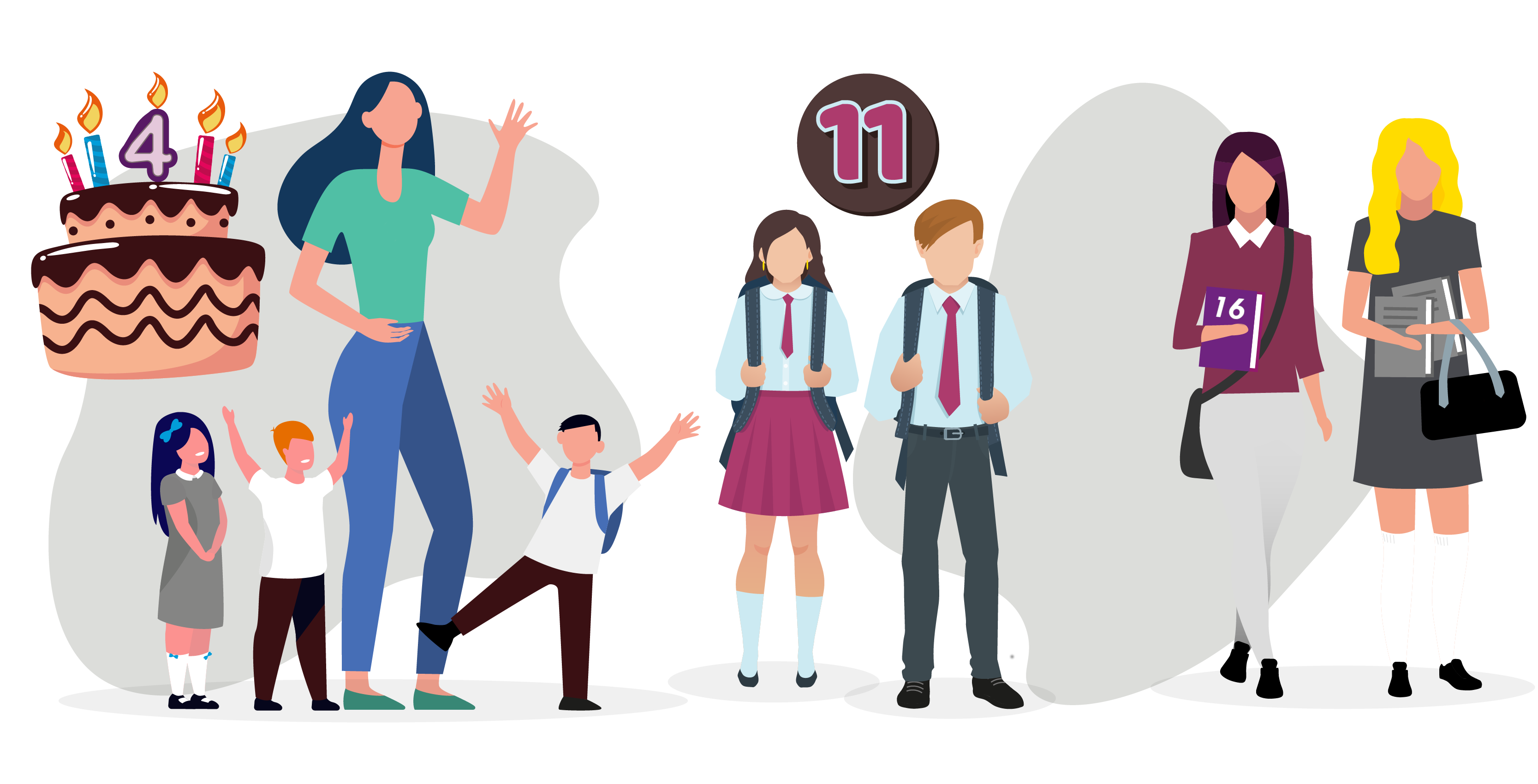
The term ‘education transition’ is when a child or young person moves into, within, between or out of an educational setting.
Transition planning is the process of preparing for these changes. Preparation is important for those with Special Educational Needs and Disabilities (SEND). This is because it creates a clear, structured roadmap throughout education. This reduces the chance of the child or young person following a route less suitable for them.
Key educational transition stages are:
- starting early years
- early years to primary school
- key stages within primary school (Early Years to Key Stage 1 (KS1) / KS1 to KS2)
- primary to secondary school
- secondary school to further education or work and preparing for adulthood
- education to onward progression (employment)
Education Transitions
Transitions can cause anxiety for some children and young people. To ensure a smooth transition, it is important for parents, education staff and other professionals to work together. This will allow the child / young person to receive the help and support they need.
- If your child or young person is supported with their SEND, their educational setting will organise a planning meeting.
- If they aren't currently supported with their SEND, contact your child or young person's educational setting to plan for this.
These discussions should take place before every transition stage. This includes a change of year / class.
Transition between settings can be smoother if your child / young person has:
- regular visits to their new school or college
- the opportunity to meet key staff
- visits to their current school or college from staff that will be working with them in the future
- their new timetable so they can talk about any concerns before they start
- a visual timetable if necessary
- the opportunity to try out lunchtime arrangements at their new school or college
- their transport planned, including any travel training they may need
The Foundation for People with Learning Disabilities website hosts a useful guide. The guide aims to help children with the transition to secondary school:
Education Transitions with an EHCP
Phase transfers is the name for transitions when a child or young person has an Education, Health and Care Plan (EHCP).
It can be useful to consider holding an annual review in your child or young person's new educational setting.
If you have any concerns about the child or young person's progress when they have started school or college, arrange to meet their teacher or the school Special Educational Needs Co-ordinator (SENCo).
IPSEA are the Independent Provider of Special Education Advice. They have a website that provides further information on planning the move to a new school for children with an EHCP:
To learn more about EHCPs, please visit Education, Health and Care Plans.
Preparing for Adulthood
From around year 8 / 9 your child should be encouraged to think about what they may like to do in the future. This includes:
- further or higher education
- training or work experience
- employment
- independent living
- interests and hobbies within their community
- thinking about their health needs
By the age of 13 / 14 someone from your child’s school will be responsible for co-ordinating a meeting.
The meeting will include discussion about plans for the future. This should involve your child and have details of their hopes and dreams. It should also include a plan of how they will receive support to achieve them.
This site also has web pages that outline useful information for young people transitioning into adulthood. This includes:
- Employment (Apprenticeships and Internships)
- Housing, Transport, Income and Benefits
- Transition Into Adulthood
School to Adulthood Guide
We have created a new transition guide, called ‘School to Adulthood’. The guide has been co-produced with local students. It aims to help young people with SEND explore their options for adulthood. It includes information on:
- independence,
- employment, and
- college life.
The guide also features videos from young people sharing their experiences:
Transitioning into College and Adult Life Guide
We also developed an online resource to support parents and carers. The resource outlines the planning and preparation for their young person’s transition into post 16 and adulthood. You can use this guide on your own, or with your child / young person:
Careers East Sussex
The Careers East Sussex website outlines various opportunities for young people with SEND. This includes finding help with educational courses and work:
Preparing for Adulthood (PfA)
PfA aims to bring together a wide range of expertise and experience of working with young people with SEND, and their families.
PfA works at a local and national level, and across government. The programme emphasizes joined-up planning across education, health and social care.
Preparing for Adulthood focuses on four key outcomes:
- Employment
- Independent living
- Community inclusion
- Health
You can find out more by visiting the NDTi website:
Preparing for Adulthood with an EHCP
Planning for your child's future starts at age 13 (Year 9), if they have an Education, Health and Care (EHCP).
As well as the statutory requirement to review the EHCP, it will also include planning for transition into adulthood. This allows enough time to start thinking and planning for their future options.
It is important to help your child or young person to think about what they like and their hopes for the future. This will help you get the most out of the preparing for adulthood review and transition planning. Some children or young people will need more support to do this. It may be helpful to ask others who know them well what they think.
At the Year 11 EHCP review meeting, their will need to be decisions about post-16 options.
Applications for school or college should be made in the autumn term of Year 11 (at age 15).
To learn more about review meetings, please visit EHCP: Reviews.
Preparing for Adulthood (PfA)
PfA programme provides expertise and support to Local Authorities and their partners. This enables them to embed preparing for adulthood from the earliest years.
It also ensures that as young people with SEND move into adulthood, they achieve:
- Paid employment
- Independent living and housing options
- Good health
- Friendships
- Relationships
- Community inclusion
The PfA web page highlights information and resources that help young people when seeking employment. You can find out more by visiting the NDTi website:
Additional Help and Support
Our SEND-specific directory, on 1Space, provides services that help with transition into adult life. Services include:
- employment support
- advice, guidance and information
- activities and events for young people
- mental health and wellbeing support
- youth groups
Visit the 16+ Transition to Adult Life category on 1Space.
Amaze SENDIASS
Amaze SENDIASS (Special Educational Needs and Disabilities Information Advice and Support Service) are a local charity. They offer free, independent, and impartial advice for all matters relating to SEND. Contact Amaze SENDIASS by:
- Phone - 01273 772 289
- Email - sendiass@amazesussex.org.uk
Visit the Amaze SENDIASS web page.
Glossary of East Sussex SEND Terms
We explain some of the terms used on this website on our page, Glossary of East Sussex SEND Terms.